
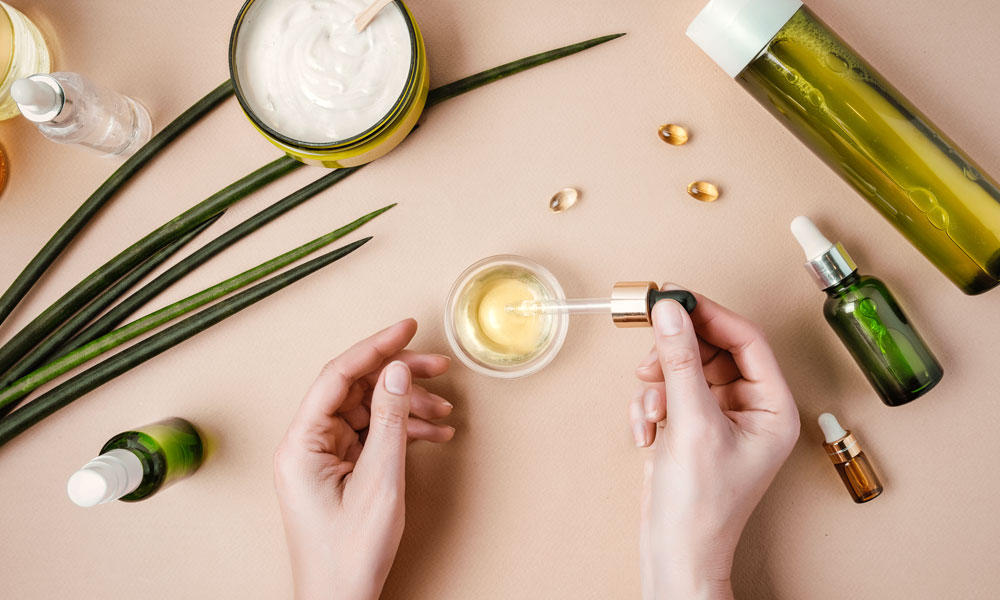
Face oils have become a staple in many natural organic skincare routines, while creams and lotions remain the classic “can’t live without” step for daily comfort. If you’ve ever looked at both on your shelf and wondered whether you’re doubling up unnecessarily, you’re not alone. The truth is: oils and moisturisers do different jobs, and for many people they work best as a team — but not always, and not in the same way for every skin type.
If you shop from an organic pharmacy-style range or lean towards essential oils and botanical ingredients, understanding the difference between oils and moisturisers is the quickest way to build a routine that feels balanced rather than heavy, greasy, or confusing.
What is a face oil, really?
A face oil is primarily made of oils — plant oils such as jojoba, rosehip, argan, or oat, sometimes with oil-soluble extracts. A well-formulated face oil supports the skin barrier, softens roughness, and helps reduce the feeling of tightness by creating a protective layer on the surface of the skin.
Face oils are best thought of as:
- emollients (they make skin feel smooth and flexible)
- barrier supporters (they reduce water loss by helping “seal” the surface)
- comfort products (they can make skin feel instantly calmer and less dry)
What oils don’t do very well on their own is add water to the skin. If your skin is dehydrated (lacking water) rather than dry (lacking oil), an oil alone can sometimes feel like it’s sitting on top without fixing the underlying issue.
A quick note on essential oils: the phrase “essential oils” is often used loosely. In skincare, essential oils are concentrated aromatic extracts and are not the same thing as carrier oils like jojoba or sweet almond. Some people love essential oils in their routine, while others find them sensitising. It’s always worth patch testing and choosing products designed for facial skin, not DIY blends.
What is a moisturiser (cream or lotion)?
Moisturisers — creams and lotions — are usually blends of water and oil held together by emulsifiers. That mix allows them to do a broader range of jobs in one step, which is why they’re a mainstay.
Most moisturisers contain a combination of:
- humectants (ingredients that attract water and help hydrate, such as glycerin)
- emollients (to soften and smooth)
- occlusives (to reduce water loss and protect the barrier)
Lotions tend to be lighter (more water, less oil), while creams are richer (more oils/butters, thicker feel). A moisturiser is generally the most straightforward way to hydrate and support the skin barrier daily, especially if your skin is prone to dehydration.
So what’s the difference in plain English?
- Oils mainly soften and seal (great for comfort and barrier support).
- Moisturisers hydrate and protect (great for daily balance and long-term skin comfort).
That’s why the question “Do you need both?” depends on what your skin is asking for.
When to choose a face oil
Face oils can be brilliant when:
- your skin feels tight, rough, or flaky
- the weather is cold, windy, or dry (central heating season)
- your skin barrier feels compromised and you want extra protection
- you want to massage the face (oils give slip and reduce tugging)
- you’re using actives that cause dryness and need extra comfort
Oils are often a favourite for dry or mature skin, but they can work for other skin types too — it’s mostly about quantity, choice of formula, and how you layer.
When to choose a moisturiser
A moisturiser is usually the best first choice when:
- your skin feels dehydrated (tight but still producing oil)
- you want a simple, consistent daily routine
- you’re prone to sensitivity and need a predictable base layer
- you wear SPF or make-up and need a smooth foundation
- you want one step that addresses multiple needs at once
For many people, a good moisturiser is the “non-negotiable” product, and a face oil is the optional extra for comfort and seasonal changes.
Do you need both? Here are the most common answers
1) You might need both if your skin is dry or easily irritated
In this case, a moisturiser adds hydration and daily support, while a face oil adds extra softness and helps reduce moisture loss.
2) You might not need both if your skin is oily and well balanced
If your moisturiser is working beautifully and your skin isn’t feeling tight or compromised, you may not gain much by adding oil. Some people with oily skin prefer a lightweight lotion and stop there.
3) You might need both if your skin is dehydrated (even if it’s oily)
Dehydrated skin often improves with hydration first (a moisturiser, or a hydrating step), then a very small amount of oil to seal it in — especially at night.
4) You might use both only sometimes
A lot of routines work best seasonally: moisturiser year-round, with oil added in winter, after travel, after illness, or during times of stress.
How to layer oils and moisturisers (and which goes first)
In most cases, the order that works best is:
- water-based steps (cleanser, spritz, serum if you use one)
- moisturiser (cream or lotion)
- face oil (a few drops pressed on top)
Why? Moisturisers contain water and humectants that hydrate. Oils then help reduce water loss and lock in comfort.
There are exceptions. If you’re using a very light lotion and a lightweight oil, you can sometimes apply oil first to damp skin and then moisturiser over the top — but if you notice pilling, slipping, or a heavy feel, go back to moisturiser first.
A useful trick: apply oil by pressing, not rubbing. Rubbing can lift the products underneath and can make skin look shiny rather than nourished.
How to tailor layering by skin type
Dry skin
- Morning: moisturiser → (optional) a drop of oil on dry patches
- Evening: moisturiser → oil on top (or mix a drop into moisturiser in your palm)
Dry skin tends to love the “moisturiser + oil seal” approach, especially in colder months.
Oily or acne-prone skin
- Morning: lightweight moisturiser (often enough)
- Evening: moisturiser → tiny amount of oil only if needed
If you want to try oil, use less than you think — literally 1–2 drops — and focus on pressing it onto areas that feel tight rather than the whole face.
Combination skin
- Morning: lotion across the face, richer cream on dry zones
- Evening: moisturiser → oil on the cheeks or drier areas only
Combination skin often does best with “zone” thinking, rather than forcing one texture everywhere.
Sensitive skin
- Choose simple formulas and introduce one product at a time
- Prefer products made for the face, and be cautious with essential oils
- Patch test, especially around the jawline and behind the ear
If you love the idea of essential oils, choose professionally blended products from a trusted organic pharmacy-style range rather than creating your own mixtures, as concentration and compatibility matter.
Common mistakes (and how to avoid them)
Using too much oil
More is not better. Too much oil can feel heavy and can interfere with how your moisturiser settles.
Putting oil on totally dry skin and expecting hydration
Oils soften and seal. If you need hydration, apply oil after a hydrating step.
Assuming “natural” means “risk-free”
Essential oils can be irritating for some people, especially if you’re already sensitive. If redness, itching, or stinging shows up, pause and simplify.
Changing too many things at once
If you add oil and switch moisturiser at the same time, you won’t know what helped (or caused problems).
The takeaway
Face oils and moisturisers aren’t competitors — they’re different tools. Moisturisers are designed to hydrate and protect in one step. Oils are best for softening, supporting the barrier, and sealing in comfort. Many people benefit from using both, particularly if skin is dry, dehydrated, or stressed, but the “right” combination depends on your skin type and the season.
If you want a simple rule: use a moisturiser for hydration, then add a face oil when you need extra comfort and barrier support. That approach keeps your routine flexible, effective, and easy to adapt — whether you’re building a minimal routine or curating favourites from an organic pharmacy range that prioritises botanical ingredients and gentle formulation.